
 BlogRare Diseases in India: The Unseen Psychosocial Burden on Parents
Rare Diseases in India: The Unseen Psychosocial Burden on Parents
6/25/2026
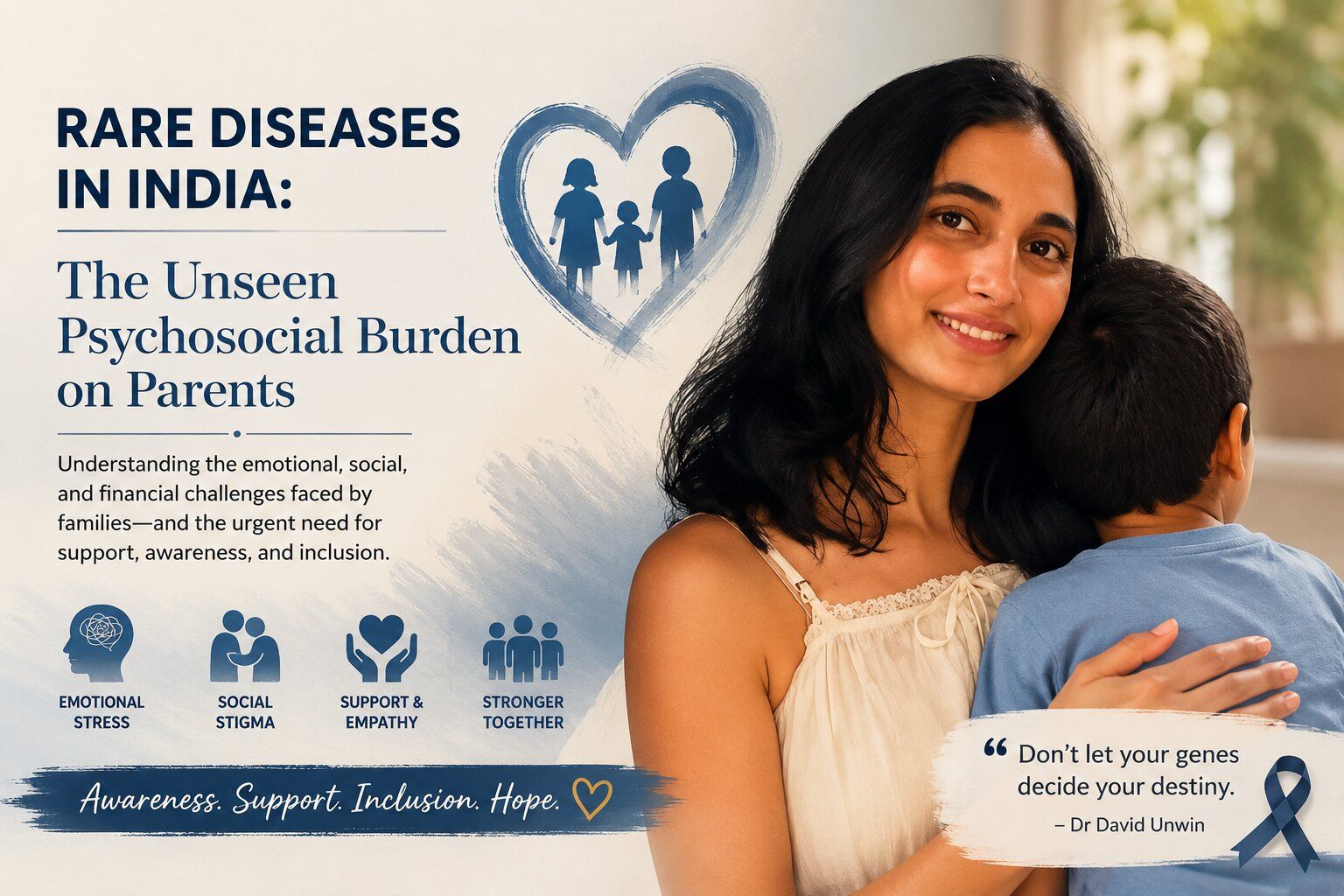
When a child is diagnosed with a rare disease, the impact extends far beyond medical
treatment. For many families in India, the diagnosis marks the beginning of a lifelong
journey characterised by uncertainty, emotional distress, financial strain, and social
isolation. While healthcare challenges associated with rare diseases are increasingly
recognised, the psychosocial burden carried by parents remains largely invisible.
Research consistently shows that parents of children with rare diseases experience
significantly higher levels of stress, anxiety, depression, and caregiver burden than the
general population. A systematic review published in the Journal of Child and Family
Studies found that caregivers of individuals with rare diseases often report reduced
quality of life, psychological distress, and inadequate social support. The rarity of these
conditions itself contributes to feelings of isolation, making it difficult for families to
find others who understand their experiences.
In India, these challenges are compounded by limited awareness and deeply rooted
societal stereotypes surrounding disability, chronic illness, and genetic conditions.
Families frequently encounter misconceptions, insensitive comments, and social
stigma. In some communities, genetic disorders may be incorrectly associated with
fate, family wrongdoing, or hereditary "defects." Such beliefs not only perpetuate
discrimination but also create an environment where parents feel judged rather than
supported.
Mothers often bear the brunt of this stigma. They may face direct or indirect blame for
their child's condition, adding emotional distress to an already demanding caregiving
role. As a result, many families withdraw from social interactions, leading to increased
loneliness and reduced access to informal support systems.
The absence of structured support groups further exacerbates these challenges.
Studies have shown that peer-support networks play a vital role in helping caregivers
cope with stress, navigate healthcare systems, and access reliable information. Yet in
many parts of India, such networks remain scarce or inaccessible. Research on rare
disease caregiving consistently highlights unmet needs for emotional support, practical
guidance, and opportunities to connect with families facing similar circumstances.
Financial pressures add another layer to the burden. Many rare diseases require
specialised medical care, long-term therapies, and frequent hospital visits, often
concentrated in urban centres. Parents may have to reduce working hours, leave
employment, or incur significant out-of-pocket expenses to meet their child's needs.
These financial challenges can strain family relationships, contribute to chronic
anxiety, and negatively affect the well-being of all family members.
Despite these obstacles, parents of children with rare diseases demonstrate remarkable
resilience. Across the world, patient advocacy groups and caregiver communities have shown
that emotional support, shared experiences, and collective action can transform lives. In India,
strengthening such networks is essential to ensuring that families do not face their challenges
in isolation.
Addressing the needs of rare disease families requires more than medical
interventions. Public awareness campaigns, accessible mental health services,
caregiver counselling, and stronger patient support groups must become integral
components of rare disease care. Equally important is challenging societal stereotypes
that stigmatise disability and chronic illness and replacing them with empathy,
understanding, and inclusion.
Parents caring for children with rare diseases should not have to bear this burden
alone. Building a more informed and compassionate society is essential to improving
not only patient outcomes but also the well-being of the families who care for them
every day. As Dr David Unwin has often remarked, "Don't let your genes decide your
destiny." While genetics may influence a diagnosis, a family's future should not be
determined by stigma, isolation, or the absence of support. With greater awareness,
stronger community networks, and inclusive policies, families affected by rare diseases
can move from surviving in silence to living with dignity, hope, and resilience.~~